
We recently discussed a company. on our YouTube channel, with a market capitalisation of over ₹1,10,000 crore that earns close to half of its revenue from the United States, and whose stock spent the better part of 18–20 months going nowhere. On a price-to-earnings basis it had drifted down to a meaningful discount to its own history. It is a very old, very well-established business – listed on the Indian exchanges for more than 25 years, with clearly defined revenue lines. The company is Zydus Lifesciences.
When we first made the case for it, the stock was flat, unloved, and trading at a clear discount to its five-year average multiple. Since then, the FY26 numbers have come in, the company has done a buyback, and – as we’ll come to at the end – valuations have moved to the historical median. But the operating story is exactly what we hoped it would be, so lets walk through it.
Why the stock struggled
The underperformance came down to two things, mainly.
First, the balance sheet changed character. Zydus had effectively been a net-cash company. Over the last year and a half it took on debt to fund a series of acquisitions and to step up R&D and capacity. That shift from “no debt” to “carrying borrowings” is exactly the kind of thing that makes a certain type of investor nervous, even when the absolute leverage stays modest.
Second, the rub-off effect of US pharma tariffs. The US moved to impose a 100% tariff on branded/patented pharmaceuticals. The entire Indian pharma pack got sold off in sympathy – less money flowing into pharma stocks, pharma funds and pharma ETFs, and Zydus got caught in that downdraft regardless of its own fundamentals.
Here’s the key point on the tariff, and it’s the crux of the whole thesis: Zydus is essentially a generics company, and generics have been kept out of the tariff. When the US formalised the framework (the proclamation came through in April 2026), generic medicines, biosimilars and their ingredients were explicitly exempted – at least for the first year, subject to a review. The tariff bites on patented, innovator, branded products. Brokerage expects only a very modest earnings impact, coming only from its small specialty/branded slice in the US. The generic engine – the bulk of the business – is untouched.
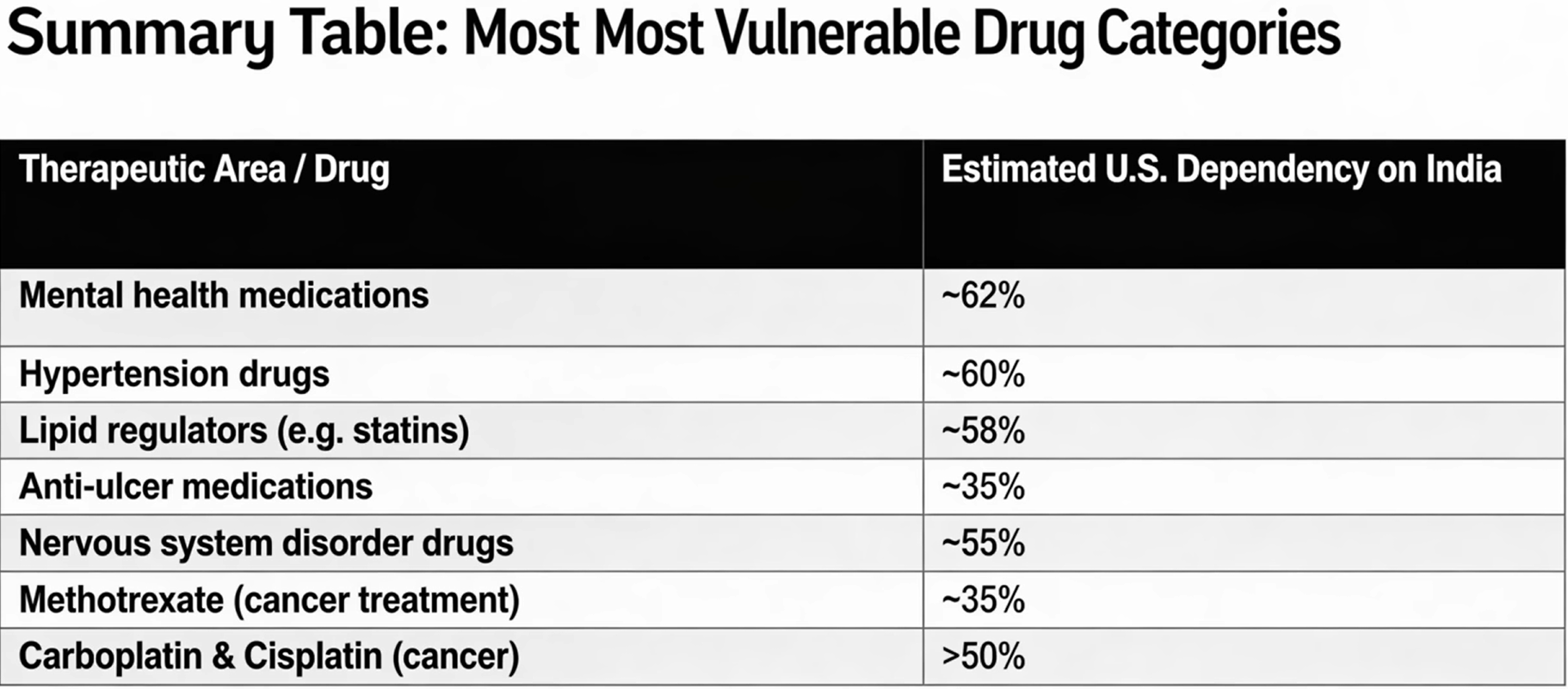
And that exemption makes economic sense. India supplies somewhere around 45-50% of US generic prescriptions, and an even larger share of certain biosimilar inputs. You simply cannot put a punitive long-term tariff on that supply without creating drug shortages and price spikes inside the US healthcare system. So even on the branded side, We’d argue it’s a matter of time before the rates ease. For a generics-led player like Zydus, the direct revenue impact has been close to nil.
This looked like a classic case of a large-cap quietly falling out of favour – few institutions paying attention, the sector out of fashion — while the underlying business kept compounding.
Where the money actually comes from
The thing we like most about Zydus is the diversification of its revenue across geographies. It is not a one-market story. Here is the FY26 business mix.
| Business line | FY26 revenue (approx.) | Share of total |
|---|---|---|
| US / North America formulations | ~₹12,000 cr | ~44% |
| India formulations (branded) | ~₹6,300 cr | ~23% |
| Consumer Wellness (Zydus Wellness) | ₹3,954 cr | ~15% |
| International markets formulations | ~₹3,000 cr | ~11% |
| MedTech (medical devices) | ₹782 cr | ~3% |
| API and others | ~₹800 cr | ~3% |
Note: the audited segment split for FY26 is Pharmaceuticals ₹22,412 cr (82.6%), Consumer Products ₹3,954 cr (14.6%) and Medical Technologies ₹782 cr (2.9%) of total revenue of ₹27,148 cr. The geographic breakdown within pharma above is derived from the company’s quarterly disclosures.
A few things stand out versus where this stood when we first covered it.
The US share has eased from ~47% to roughly 44% – not because the US business shrank, but because the newly acquired consumer-wellness and medtech businesses have grown the denominator. That is a good kind of dilution. It means the company is becoming more diversified, not less. In Q1 FY26 the US was still ~49% of revenue; by Q4 it was closer to 40%, precisely because the other engines were firing.
The Consumer Wellness business — that’s Zydus Wellness, a listed subsidiary in which Zydus Lifesciences holds roughly a 58% stake – is almost entirely an India operation, with only a small single-digit slice coming from overseas. This is a genuinely good business in its own right. The brands are ones we’ve all known forever: Glucon-D, Sugar Free, Complan, Nutralite, EverYuth, Nycil. Sugar Free alone holds a ~96% share of the sugar-substitute market. In FY26 this business grew sharply (helped by the Comfort Click acquisition), with full-year net sales of ₹3,940 crore, up ~46%.
So you have a company drawing roughly half its revenue from the US and the other half from India and other markets. That structure protects it. If one market wobbles, the stock doesn’t get hammered the way the 80–90%-US-dependent pharma names do. R that’s the part of this that appeals to me most.
What Zydus actually sends to the US
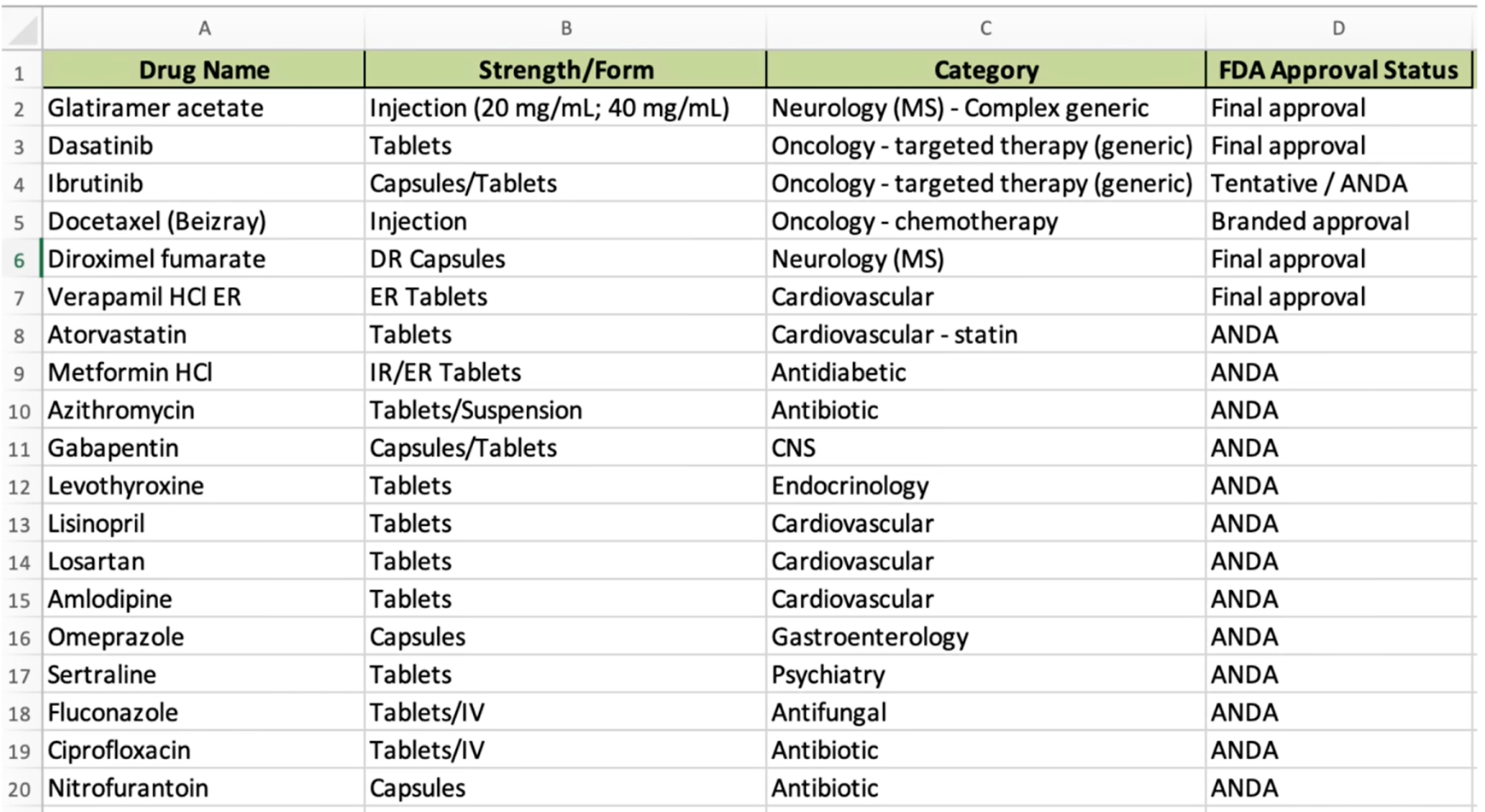
The second reason we like the stock is that the generics it supplies to the US are critical – the kind of medicines you can’t slap a high tariff on for long. The US portfolio spans metabolic and neurology drugs, multiple sclerosis, cardiovascular, oncology and specialty medicines, alongside a deep bench of everyday generics. Every one of these is a generic. None of them is a branded formulation in the tariff net. Through FY26 the company kept the machine running – filing ANDAs, winning approvals and launching new products every quarter – and crucially, its US market share has stayed intact. It is not eroding. And yet the multiple compressed anyway. That gap between “business is fine” and “stock is being marked down” is exactly the kind of dislocation worth paying attention to.
The acquisitions – and a new one
The debt was raised mainly to fund acquisitions. Here is where each one now stands.
| Acquisition | What it is | Status | Approx. cost |
|---|---|---|---|
| Amplitude Surgical | French orthopedics / medtech | Completed (100% by Oct 2025) | ~₹2,400 cr |
| Comfort Click | UK digital consumer-wellness / VMS (via Zydus Wellness) | Completed (Aug 2025) | ~£239 mn (~₹2,700 cr) |
| Agenus biologics facilities | Two US (California) biologics plants | Completed (Jan 2026) | ~$75 mn upfront + up to $50 mn earn-out (~₹1,000 cr) |
| Assertio Holdings (new) | US specialty / oncology platform | Signed May 2026, pending | ~$166 mn (~₹1,400 cr) |
Will every one of these deals pay off? Only time will tell — that’s always the honest answer with M&A. But the pattern is a long-standing, cash-generative franchise using a temporary dip in sentiment to widen its geographic reach and buy optionality in higher-margin niches.
The financials
Now to the part that matters most. The operating performance in FY26 was strong, and it’s worth putting the numbers next to the worry.
| Metric | FY25 | FY26 | Change |
|---|---|---|---|
| Revenue from operations | ₹23,242 cr | ₹27,148 cr | +16.8% |
| EBITDA | ₹7,059 cr | ₹8,475 cr | +20.1% |
| EBITDA margin | 30.4% | 31.2% | +80 bps |
| Net profit (reported) | ₹4,526 cr | ₹5,040 cr | +11.4% |
| Net profit (adjusted)* | – | ₹5,456 cr | +15% |
| EPS (basic) | ₹44.97 | ₹50.09 | +11% |
Adjusted profit strips out one-off items in FY26, chiefly a ~₹398 cr settlement on generic Mirabegron (Myrbetriq) and the one-time impact of the new labour codes. The fourth quarter alone posted a 33.7% EBITDA margin.
Step back and look at the long arc. A decade ago this business ran operating margins in the 17–20% range. Today it’s at ~31%, with a Q4 exit margin near 34%. Sales have compounded steadily, EPS has compounded steadily, and the margin profile has structurally improved. This is not a struggling company. It is a company whose stock was struggling – two very different things.
On the debt that spooked everyone: yes, Zydus went from net-cash to carrying borrowings. But the actual leverage is modest. Net debt at the end of FY26 was roughly ₹4,500 crore, a net-debt-to-equity of just 0.16x. Finance costs did jump – from ~₹166 cr to ~₹439 cr – which is the visible “cost” of the acquisition strategy, and worth watching. But a 0.16x balance sheet on a business throwing off this kind of cash flow is a comfortable, not a scary, place to be. The “₹9,000–10,000 crore of debt” framing that got passed around overstated the picture; a good chunk of that is working-capital borrowing, and against it sits ~₹7,000 crore of cash and investments.
There’s also a tailwind hiding in plain sight: a company that earns ~44% of revenue in US dollars benefits as the rupee weakens against the dollar. That flows straight through to the earnings line, on top of the topline expansion the acquisitions bring.
The valuation
When We first made this call (December 2025), Zydus had de-rated to a P/E of around 18x against a five-year median closer to ~22x – roughly a 20% discount, on a quality franchise, in a sector we like. The setup is simple: a long-term compounder available cheap because of headwinds (debt optics, US-revenue concentration, tariff sentiment) that we judged to be temporary and not fundamental.
As of mid-June 2026, here’s where it sits:
| Then (Dec 2025) | Now (Jun 2026) | |
|---|---|---|
| Share price | ~₹920–940 | ~₹1,105 |
| TTM P/E | ~18x | ~22x (≈20x on adjusted EPS) |
| Market cap | ~₹90,000 cr | ~₹1,11,000 cr |
The stock has re-rated back to roughly its long-run median multiple . The company also recommended a final dividend of Re 1 per share and completed a ₹1,100 crore buyback at ₹1,150 per share — both signals of management’s own confidence.
What that means going forward is that You’re buying a high-quality, diversified, well-managed compounder at a fair multiple. The return from here has to come from earnings growth. With the company guiding to high-teens revenue growth in FY27, the US generics base intact, the specialty/biosimilar pipeline building, and the acquisitions starting to contribute, we still think that earnings growth is there. But the margin of safety is thinner than it was six months ago.
